Let me guess: you’re tired of all those biased paid or affiliate articles.
You couldn’t find anyone who actually gave you a satisfactory answer for running your agency or cold email campaigns.
Email hosting services have undergone a significant makeover, introducing a mix of veterans and fresh faces who vow to boost sales and productivity without compromising security.
Choosing the right email host can make or break your sales funnel because it directs how businesses of all sizes operate.
For small and medium-sized businesses, opting for a professional email hosting service is worth investing in, as it offers essential benefits like customization, enhanced security, and professional branding—making it a smart investment for better communication.
We’re exploring the top 8 email hosting services, from Mailforge.ai’s cutting-edge tools to Microsoft 365’s rock-solid performance.
We’ll examine each service’s performance, interface, and bang for your buck, helping you pick the perfect fit for your organization’s needs.
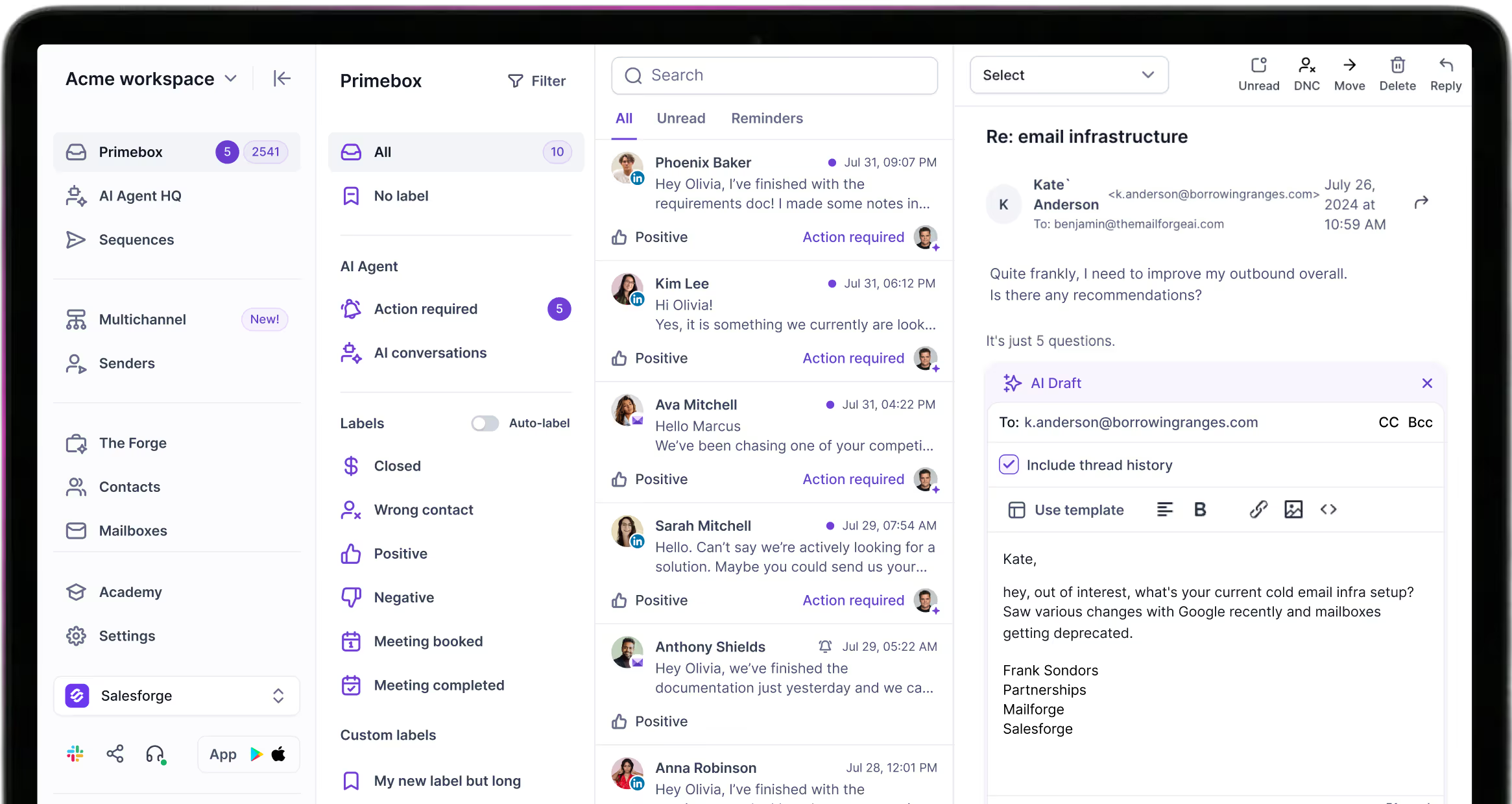
Mailforge.ai is the best email hosting service in 2024 for running cold email campaigns, thanks to its lightning-fast setup process.
As a Co-Founder of Mailforge, I may be biased, but here's why Mailforge.ai is the real deal: With Mailforge.ai, launching cold email campaigns is lightning fast, making it the best solution for SaaS founders looking to book demos or agency owners trying to land clients.
Users can simply bring their domains, create emails, and be good to go! There's no need to mess around with SPF, DKIM, or DMARC technical BS; it's all automated.
When evaluating the best email hosting services, it's important to assess key features such as storage requirements, storage capacity, spam filtering, and security measures like two-factor authentication and data encryption.
Business email hosting typically offers better security, including encryption and advanced spam filtering, and many providers offer enhanced privacy and compliance with regulations like HIPAA or GDPR for sensitive industries.
Providers should also offer high uptime guarantees (99.9% or higher) and robust security. Reviewing uptime statistics is important to ensure reliable email service.
These eight key factors must be considered when choosing your email hosting company.
In selecting these email hosting providers, we conducted thorough research in multiple ways.
Choosing the right email hosting provider involves evaluating how well the service integrates with different tools used for business operations, such as CRM systems and collaboration platforms, to encourage efficient workflow and collaboration.
By integrating our findings with your considerations, we ensured that these providers meet the essential criteria for easy setup with Cold-Email tools, affordability, ample sending capacity, excellent email deliverability, and reliable customer support.

Mailforge excels in automating cold email tech setup and scaling cold email campaigns, making it the ideal choice for businesses seeking to enhance their email outreach efficiently and cost-effectively.
Unlike more costly options like Google Workspace, Mailforge.ai leverages a robust infrastructure that supports healthy shared IP addresses and proactive spam elimination. This technology parallels the deliverability maintenance seen in big names like Gmail and Outlook, securing comparable deliverability rates without breaking the bank.
The platform easily integrates with existing cold email tools, simplifies the technical setup, and facilitates smooth campaign execution. Mailforge.ai also gives you more control over your email server settings and user permissions, ensuring only authorized users can send emails from your company domain.
As businesses grow, Mailforge.ai scales effortlessly, ensuring that expanding your outreach doesn’t have to mean escalating costs.
With its strong sending capacity and impressive deliverability, Mailforge.ai stands out as an intelligent, budget-friendly choice for your emailing needs.
To get started, you can migrate your cold email domains to the Mailforge platform by changing the nameserver or purchasing domains from us. Then, you can create email inboxes, and the SPF, DKIM, and DMARC technical setup will be automatically taken care of within minutes.
Best For: Businesses looking to efficiently scale their cold email outreach without incurring high costs, particularly those needing speed and simplicity in campaign setup.
Pros:
Cons:

Google Workspace excels as a cloud-based solution, ideal for businesses seeking robust collaboration and communication tools integrated with their email hosting.
Formerly known as G Suite, it offers a seamless blend of enterprise-level Gmail with essential productivity apps like Google Docs, Google Meet, and Google Calendar as integrated productivity tools.
Google Workspace is particularly suitable for growing businesses due to its scalability and collaborative features. It provides custom email domains, Google Drive, Docs, and Calendar, with storage ranging from 30GB to unlimited per user.
This platform guarantees a 99.9% uptime and advanced spam filters, with integration across Drive and Meet, enhancing communication reliability and efficiency.
With Google Workspace, organizations can leverage various tools, including Hangouts for messaging, Keep for note-taking, and Team Drives for collaborative file storage. The robust security features offer two-step verification and endpoint management to protect data.
Although it’s priced on the higher side, the value delivered justifies the investment, making it a top contender for those who mean serious business.
Best For: Growing businesses needing an all-encompassing cloud-based suite for enhanced collaboration, communication, and productivity, especially teams prioritizing cloud collaboration with 30GB to 5TB of storage per user.
Pros:
Cons:

For those deeply integrated into the Microsoft ecosystem, Microsoft 365 is known for its robust productivity tools like Outlook and Word, making it one of the best email hosting services available.
In addition to being an email solution, Microsoft 365 integrates seamlessly with Outlook and connects with Word, Excel, PowerPoint, and OneDrive, offering robust security features.
It includes an impressive array of applications such as Word, Excel, PowerPoint, OneDrive, Skype, Yammer, Microsoft Teams, and Planner. Microsoft 365 provides a 99.9% uptime SLA and enterprise-grade security, ensuring reliability and peace of mind for businesses.
The learning curve for Microsoft 365 is minimal, so most users can quickly adopt and start using its features with little training required. This platform is ideal for users ranging from individual freelancers to large corporations, offering tools that enhance collaboration by allowing direct document sharing and real-time editing, avoiding the clutter of email attachments.
Microsoft 365 also tailors its offerings with various packages to suit different needs. The Business Premium plan, for instance, is packed with essential features like custom domain addresses, spam protection, and data loss prevention.
While the base plan has substantial cloud storage, enterprise users can upgrade to unlimited storage options.
Additionally, potential users can explore these features with a 30-day free trial, making it a compelling choice for those committed to Microsoft’s best way of doing business.
Best For: Microsoft 365 is ideal for those already using Microsoft products, ranging from individual users to large corporations, seeking seamless integration and extensive collaboration tools.
Pros:
Cons:
Choosing between Google Workspace or Microsoft 365 is a key decision for most businesses, as both offer reliability and ease of use.
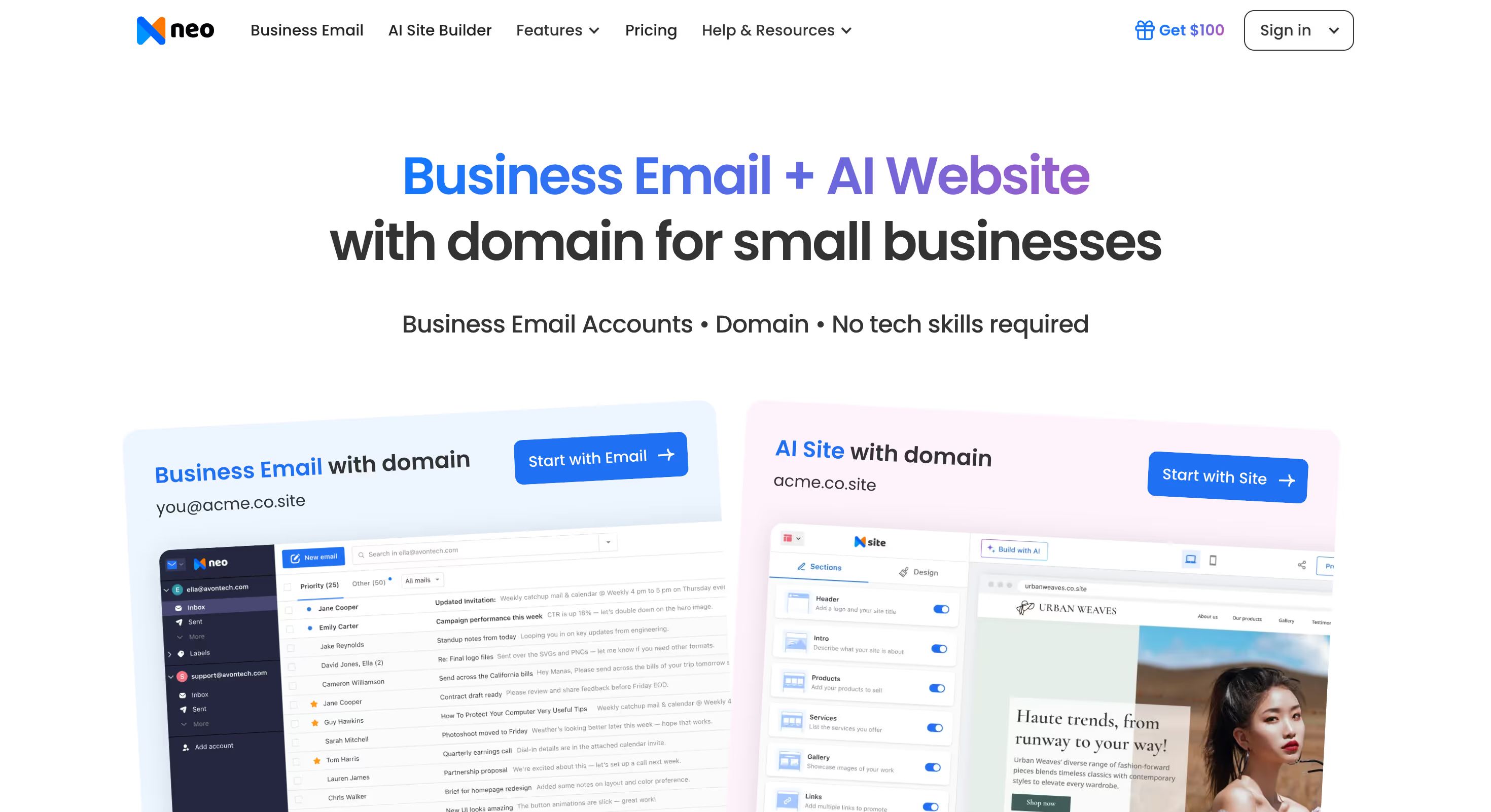
From the small businesses and freelancers’ perspective, Neo is one of the best email hosting service providers.
One of the reasons why we are saying this is that it offers all the important elements of setting up your digital identity.
You need a custom domain name and a website to make your brand visible, and Neo provides them for free with its email hosting plans.
When you buy Neo’s email hosting plans, you can register your custom domain name at no extra cost, but it only supports .co.site extension. Incorporating your business name into your custom email address helps establish a professional email presence and inspires trust with customers.
Neo also has an AI-powered website builder, which automates the process of website designing and content creation. It has a drag-and-drop website editor to make the changes in the AI-generated structure, and you can even tweak the content.
When it comes to email hosting, Neo guarantees 100% email delivery and zero data loss. It offers up to 100GB of storage depending on your plan, like 15GB on Starter, 50GB on Standard, and 100GB on Max.
With Neo, you get a custom email address that reflects your business name, helping you create a professional email identity. Dedicated email services like Neo generally look more professional, inspire trust, and offer customization options compared to free email platforms.
Regarding features, there is plenty to show. For email management, the platform supports priority inbox, email rules, turbo search, contact groups, and block and allow senders.
It has a dedicated Growth Suite, which includes features for email marketing, like email templates, AI Smart Write, appointment booking, email campaign mode, advanced analytics, and even an invoice builder.
Best For: Suitable for small business owners, freelancers, and professionals who are just starting with digital marketing.
Pros
Cons
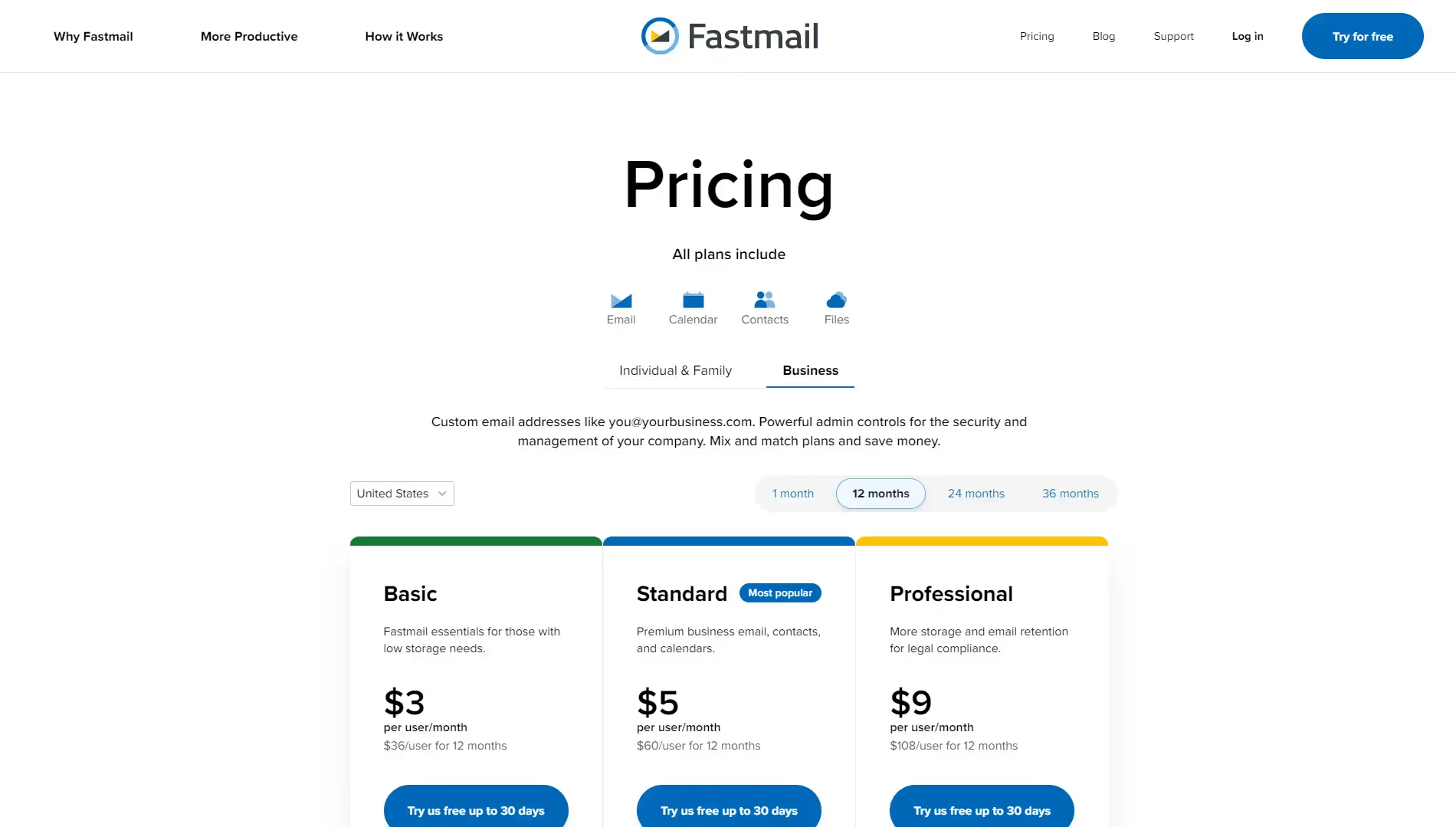
Fastmail excels as a privacy-focused email hosting service, ideal for managing multiple domains efficiently.
Starting at just $3 per user per month, Fastmail can handle anywhere from 4,000 to 16,000 emails per user per day.
While it may not provide round-the-clock customer support, its strengths lie in its robust privacy tools and domain management capabilities.
Users can manage mail from FastMail addresses or up to 100 custom domain-based email accounts all through a unified inbox, which is quite the digital juggling act made easy. Fastmail features a simple interface that is user-friendly and requires minimal training, making it accessible for small businesses and non-technical users.
Like other top email hosting services, Fastmail provides custom inboxes, aliases, and heightened security measures compared to free email services.
Additionally, Fastmail allows the creation of numerous email aliases with its Masked Email feature, enhancing user privacy. The flexibility to mix and match plans caters to varied business needs, although the base plan’s 2 GB email storage might be a tad limiting for data-heavy users.
Conversely, the professional plan includes 100 GB of storage and an email retention archive, which is essential for legal compliance and makes email archiving and retrieval straightforward.
Shared calendars and company address books support up to 100,000 contacts, ensuring no one is left off the memo.
Best For: Privacy-conscious businesses and entrepreneurs needing to manage multiple domains and email aliases efficiently.
Pros:
Cons:

Hostinger email hosting is ideal for businesses seeking an affordable yet robust email hosting solution, especially for those looking for entry-level plans often bundled with web hosting services.
As one of the leading web hosting providers, Hostinger offers shared hosting packages that may come with limited storage and storage space compared to dedicated plans, making it important to assess your business’s email usage and file sharing needs.
Hostinger’s basic plan starts at just £0.59 per month and may include a free email service as part of its web hosting package, making it a cost-effective choice for small businesses and startups.
As the top contender in our roundup, Hostinger isn’t just about saving pennies; it also provides many tools, like an integrated calendar, auto-reply, and ad-free service, ensuring smooth and professional communication.
Whether you’re a fledgling startup or a growing enterprise, their business email package allows you to brand your email domain to match your website, elevating your professional image.
Additionally, with no pesky ads and unlimited email filters, your inbox stays clean and efficient—precisely what a bustling business needs.
Best For: Small to medium-sized businesses looking for an affordable and feature-rich email hosting solution.
Pros:
Cons:

Rackspace provides exceptional migration assistance, making it an ideal choice for businesses seeking a smooth shift to a new email hosting service.
With unlimited mailbox sizes and robust Microsoft integration, it caters well to businesses of all sizes.
Rackspace offers paid plans starting at $2.99 per user per month, with a free 14-day trial period for businesses to test the service before committing.
The paid plans include options for unlimited archiving starting at $6.99 per month and are renowned for exceptional 24/7 customer support and migration assistance.
Despite some criticisms about its customer support, the company’s commitment to uptime and free migration services on all plans underscores its reputation as a reliable partner in email hosting.
Best For: Businesses needing extensive migration support and seamless Microsoft integration with flexible email hosting options.
Pros:
Cons:

Namecheap offers an economical email hosting solution that integrates ease of setup with a reliable private email service, making it an excellent choice for beginners.
Distinguished from the less desirable cPanel Email, Namecheap’s Private Email Service shines with its commendable reliability and straightforward web interface.
Since its inception in 2018, users have loved its efficiency, noting that emails consistently land in the intended inbox, not spam. Despite its strengths, Taylor switched to G Suite for advanced security features like two-factor authentication (2FA), which Namecheap’s IMAP solution lacks.
For those starting or operating on a tight budget, Namecheap remains a solid contender, especially with features like unified inboxes and a generous 60-day free trial.
Namecheap also offers a free email hosting plan and free email accounts for limited use, making it attractive for individuals and small businesses who want to test the service before committing.
Many email hosting providers, including Namecheap, provide free plans or free trial periods for new users, though these free options often come with basic functionality and limited storage compared to paid plans.
Best For: Beginners and those seeking an economical and reliable email service with easy setup and basic features.
Pros:
Cons:

If you're trying to win clients and close deals, a business email builds credibility before your email is even opened.
With Spacemail, you can create a branded email like @mybusiness.com and set it up in one tap with Spacemail’s free unbox tool that connects your domain to your inbox in seconds. That’s because Spacemail is built by Spaceship, one of the world's biggest domain registrars, which means domains, security, and hosting all sit under one roof.
Spacemail has security built in as standard. The clean interface makes it easy to find what you need, and the built-in calendar helps turn emails into events the moment they land in your inbox. Smart AI drafting helps you reply quickly when you're busy and dark mode is great for late nights. And if you need to work on the go, Spacemail iOS and Android apps keep everything in sync.
Plans start at an incredible value, right now from just $0.59/mo, and scale with your team as it grows. It’s also easy to create aliases, add more storage, set up catch-all, and there’s a free migration tool to bring your emails over from another provider.
Best for: Individuals and small to medium businesses who want a secure, professional inbox without the enterprise price tag.
Pros
Cons
Google Workspace, formerly G Suite, stands out as one of the best email hosting providers and is a top choice for comprehensive business email hosting.
Integrating Gmail with productivity tools like Docs and Meet ensures seamless collaboration. Key points to consider when choosing among the best email hosting providers include reliability, security, and integration with other business tools.
Google Workspace offers a 99.9% uptime guarantee, advanced spam filters, and robust security features, making it ideal for businesses prioritizing professionalism, efficiency, and data protection.
Compared to free email services, dedicated email hosting services like Google Workspace, Microsoft 365, Zoho Mail, and ProtonMail typically provide better uptime and reliability. For 2026, top email hosting services include Google Workspace, Microsoft 365, Zoho Mail, and Titan.
Hostinger is the top choice for email and web hosting, offering affordability and robust features like customizable templates and spam protection from $1.59 monthly.
Their business email package allows you to use your own domain name, set up custom email addresses, and create multiple email accounts for your business, enhancing professionalism and flexibility.
It also includes integrated calendars, auto-reply, an AI email assistant, and advanced anti-spam protection, all at a very low entry price—ideal for small- to medium-sized businesses aiming for a professional online presence.
Mailforge.ai shines as an optimal email hosting service for sales teams.
Efficient email communication is crucial for sales, and Mailforge.ai supports this with features like scheduled send and read receipts, which help teams optimize communication timing and track engagement.
It excels in automating tech setup and scaling cold email campaigns efficiently and affordably.
With robust infrastructure supporting shared IP addresses and proactive spam elimination, it ensures comparable deliverability rates to industry giants like Gmail and Outlook, making it a bright, budget-friendly choice.
For new agency owners seeking cost-effective email hosting, Namecheap emerges as a top choice.
Renowned for its affordability and user-friendly interface, Namecheap’s Private Email Service offers reliability and straightforward setup.
Despite lacking advanced security features like 2FA for IMAP solutions, it’s lauded for consistent inbox delivery. However, their emails get burned quickly, which could be better in the long run.
Zoho Mail is also a solid option for small businesses looking for the best email hosting services. It offers a basic plan starting at just $1 per user per month, an ad-free interface, integration with Zoho CRM, and a 'Forever Free' plan for small teams.
Zoho Mail is known for being affordable, secure, and user-friendly, making it a dependable choice for business email hosting.
The best email hosting services offer various options tailored to meet diverse needs.
Each service presents unique strengths, from Mailforge.ai’s automation prowess to Proton Email’s fortress-like security.
While these are top choices, other providers may be more suitable for specific requirements, especially if you need specialized features or a secure email service focused on privacy and encryption.
Most users will find the features of these providers sufficient for their needs. However, it's crucial to prioritize a secure email service to protect your business from data breaches. Many email hosting providers offer enhanced security features, including spam filtering and encryption, to safeguard your communications.
Business email hosting can simplify communication and protect your data as your business grows, ensuring scalability and reliability as your needs evolve.
When it comes down to making a decision, choosing the right provider depends on specific requirements and preferences. But these four are our top priorities -
Don’t forget to make an informed decision!


.png)