Choosing the right sign-off, like Warm Regards, Best Regards, or Kind Regards, is important because it sets the tone for your email and shows how you feel about the person you're writing to.
So, why do the differences between Warm Regards and Kind Regards matter?
Well, the way you sign off can change how the person feels about your email. For example:
In this blog, we will look at:
Whether you're just starting to write emails or want to improve your skills, this guide will help you pick the right sign-off for every situation.
Let's get started and learn how to make your emails better!
The acceptability of each sign-off depends on the context—whether you are writing a business letter, a casual email, or a message to close friends.
In formal settings, such as business letters, 'Kind Regards' and 'Best Regards' are preferred, while 'Warm Regards' is less common and is generally reserved for informal communication or messages to close friends.
Let’s define “Warm Regards.” You’ve likely seen it at the end of emails, but it carries more weight than a simple goodbye.
Here’s what it conveys and when you should use it:
Warm Regards is often used for close friends and relatives, and is considered slightly odd to end business letters or formal letters with unless the people involved are social acquaintances.
When choosing a sign-off for your letters or emails, consider the relationship and the level of formality required.
Read - How to Write a Formal Email? 7+ Examples Inc. Tips and Best Practices
You’ve probably seen “Best Regards” in countless emails, but what does it really mean?
Here’s a breakdown:
In short, Best Regards is a reliable, go-to sign-off when you need to keep things professional while still sounding friendly and approachable.
It's important to consider your relationship with the recipient when choosing Best Regards, as matching the sign-off to your connection with the recipient helps maintain the right tone and professionalism.
You’ve probably come across it in emails or maybe even used it yourself, but what does it actually mean?
In short, Kind Regards is perfect when you want to keep things professional but still polite and warm. It’s like sending a virtual handshake with a smile. Kind Regards is equally formal or slightly more formal than Best Regards in most professional contexts.
Read - How to Change the Email Signature in Outreach? [6-Steps]
Choosing the right sign-off in your emails is important, and “Warm Regards” can be a great option when you want to sound friendly and approachable.
This sign-off is especially acceptable when emailing a best friend or close friends, or in situations where a friendly tone is appropriate.
Let’s explore when it’s best to use it with some examples!
In short, whenever you want to keep the conversation light and positive, “Warm Regards” is a solid and acceptable choice, especially for emails to a best friend or close friends. Now let’s take a closer look at when it’s best to use Best Regards.

Using “Best Regards” is a friendly yet professional way to end a message, and knowing when to use it can really improve your communication.
In professional emails, especially in a professional or business setting, 'Best Regards' is a common closing word that is widely used to convey respect and professionalism.
Let’s dive into situations where “Best Regards” is the perfect choice.
You can use “Best Regards” in your daily business emails. For instance, if you send a report to your manager, this sign-off works well. It’s respectful and shows that you value their time.
Example: “Thank you for your feedback on the project. I appreciate your insights. Best Regards, [Your Name]”
After a meeting, it’s a good idea to follow up with a summary or action items. Using “Best Regards” here keeps the tone professional, while still being warm.
Example: “It was great discussing our plans today. Here’s a recap of what we talked about. Best Regards, [Your Name]”
When you’re reaching out to someone new, like a potential client or partner, “Best Regards” is a solid choice. It shows you’re professional and courteous without being too formal.
In a professional email, 'Best Regards' is a safe choice for both formal and informal situations, and the word 'regards' or 'best' is often chosen depending on your familiarity with the recipient and the level of formality required in a professional or business setting.
This can help to balance the tone of a promotional email and prevent it from feeling too salesly, such as an email in which you share a product catalogue or event flyer.
Example: “I’m excited to connect and discuss how we can work together. Best Regards, [Your Name]”
If you’re keeping in touch with colleagues or clients you’ve known for a while, “Best Regards” strikes the right tone. It’s respectful, yet friendly, helping to maintain those connections.
Example: “I hope you’re doing well. Let’s catch up soon! Best Regards, [Your Name]”
Whether you’re reaching out to new contacts, following up after meetings, or just keeping in touch, Best Regards is a good choice. So, the next time you hit “send,” remember to use “Best Regards” to leave a positive impression!
Knowing when to use “Kind Regards” can help you communicate more effectively in your emails. In British English, “Kind Regards” is commonly used in business correspondence, especially in a formal setting where professionalism is important.
Let’s explore some situations where this sign-off shines, and I’ll give you some practical examples to make it clear.
When you’re emailing someone for the first time, using “Kind Regards” is a great choice. It shows respect and professionalism.
Example: Imagine you’re reaching out to a potential client to introduce your services:
Dear [Client’s Name], I hope this email finds you well. I wanted to take a moment to introduce our company and the services we offer. Kind Regards, [Your Name]
If you’ve just had a meeting or conversation, and you want to follow up, “Kind Regards” is perfect. It expresses appreciation and keeps the door open for further communication.
Example: You met someone at a conference and want to continue the conversation:
Hi [Contact’s Name], It was a pleasure meeting you at the conference. I’d love to chat more about our shared interests. Kind Regards, [Your Name]
Whether you’re connecting with a new colleague or a business partner, “Kind Regards” works well. It’s friendly yet professional, making it a safe choice.
Example: You’re emailing a new teammate about a project: Subject: Collaboration on Project X Hi [Teammate’s Name], I’m excited to work together on Project X. Let’s schedule a time to discuss our ideas! Kind Regards, [Your Name]
When emailing clients, using “Kind Regards” demonstrates that you value their business.
Example: You’re sending a proposal to a client:
Dear [Client’s Name], Attached is the proposal we discussed. Please let me know if you have any questions. Kind Regards, [Your Name]
In situations where you want to maintain a professional tone but also feel approachable, “Kind Regards” is perfect.
Example: Sending an update about a project to your boss:
Hi [Boss’s Name], I wanted to provide you with a quick update on the project status. Everything is on track. Kind Regards, [Your Name]
So next time you write an email, think about how you want to come across. Choosing “Kind Regards” can make all the difference! It’s a small touch that says a lot.
Let’s talk about the difference between Warm Regards and Best Wishes. You’ve probably seen both used in emails, but they have a distinct vibe. The acceptability of each closing depends on the level of formality and your relationship with the recipient.
Knowing when to use one over the other can make your message feel just right.
Choosing the right closing is important for setting the appropriate tone in your email, whether you need something more formal or informal.
When should you use Best Wishes? It is more suitable for special occasions or when you want to add a more personal touch. 'Best Wishes' is often used in a casual email or informal situation, rather than in formal business communication.
It works well when someone is leaving a job, celebrating an achievement, or when you just want to offer some sincere well-wishes.
For example, if a colleague is retiring, Best Wishes feels right. You wouldn’t use Warm Regards here because this moment is more personal. Or, if you’re congratulating someone on a big win, Best Wishes lets them know you’re truly happy for them.
In short, if you’re writing a business email, Warm Regards is a safe bet. But if there’s something personal to celebrate or a heartfelt message to send, Best Wishes steps in and adds that extra warmth.
Picking the right sign-off for an email might seem like a small detail, but it’s actually super important. It can change the entire feel of your message.
When choosing a sign-off, always consider the recipient and the type of correspondence—whether you’re writing business letters, formal letters, or personal emails—as the appropriateness of phrases like "Warm regards" can vary depending on the context.
I’ve been there—sending emails and realising later that the sign-off didn’t quite match the tone. For example, using a formal phrase like "at your earliest convenience" in the closing of an informal email can sound overly formal and out of place.
Let’s go over some common mistakes and how you can avoid them.
We all love how Warm Regards feels friendly and positive. But, sometimes, it can be a little too casual. For example, you’re emailing a new client about a serious business deal, and you sign off with Warm Regards.
It might come off as too relaxed for the situation. In a professional or business setting, using Warm Regards is not always acceptable, especially when a more formal tone is required.
Also, if you’re talking to a client about contract negotiations or an important project, Warm Regards could feel too familiar.
In these cases, Best Regards or Kind Regards work well because they maintain a professional tone while still being polite and approachable.
Now, let’s clear up some Misconceptions About Best Regards. Although it’s commonly used, there are a few misunderstandings about when and how to use this sign-off effectively.
Read - Top 7 Email Warmup Tools For Better Deliverability in 2024
A lot of people think Best Regards is always the best choice. But it’s not always as formal as it sounds. It’s kind of in the middle—neither too formal, nor too casual.
Best Regards works well in most professional situations, but it might not be formal enough if you’re writing to someone really important, like a company executive. In that case, something like Sincerely or Yours Faithfully would be a better fit.
On the other hand, if you’re emailing a close colleague or friend, Best Regards can feel a bit formal. For informal or casual emails, especially to close friends, a more relaxed sign-off is often better.
To match the friendly tone of an informal or casual email, you might want to go with something more relaxed, like Warm Regards or even Cheers.
It's important to choose the right way to end an email, but there's something even more important—making sure your emails get delivered.
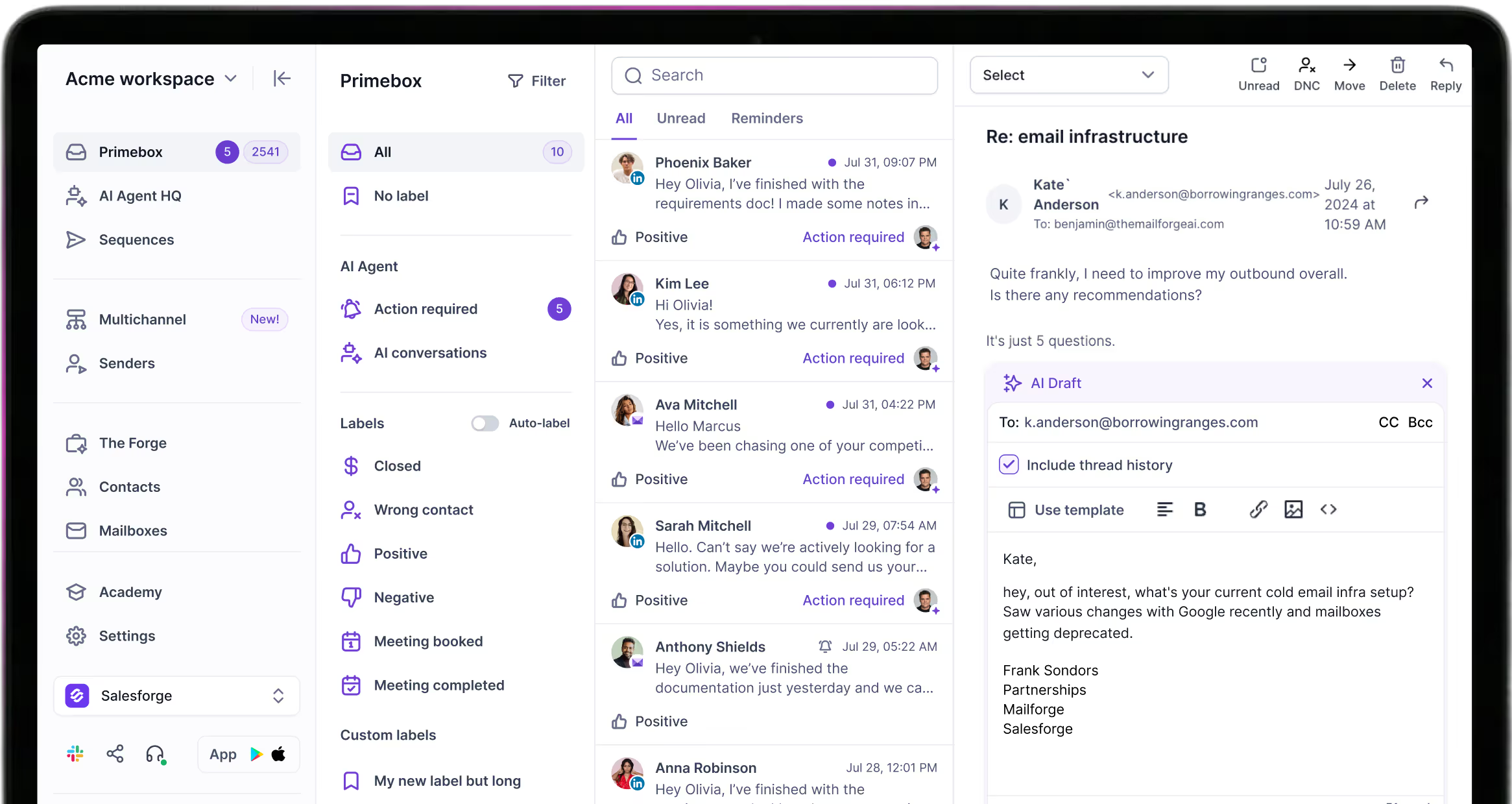
If your email doesn't reach the inbox, even the best sign-off won't matter. This is where Salesforge can help.

Salesforge is not just about writing sign-offs. It helps you send thousands of personalized emails.

Whether it’s the start, middle, or end of your message, Overdrive AI makes each email feel like it’s written just for that person. This is very useful when sending emails at scale.
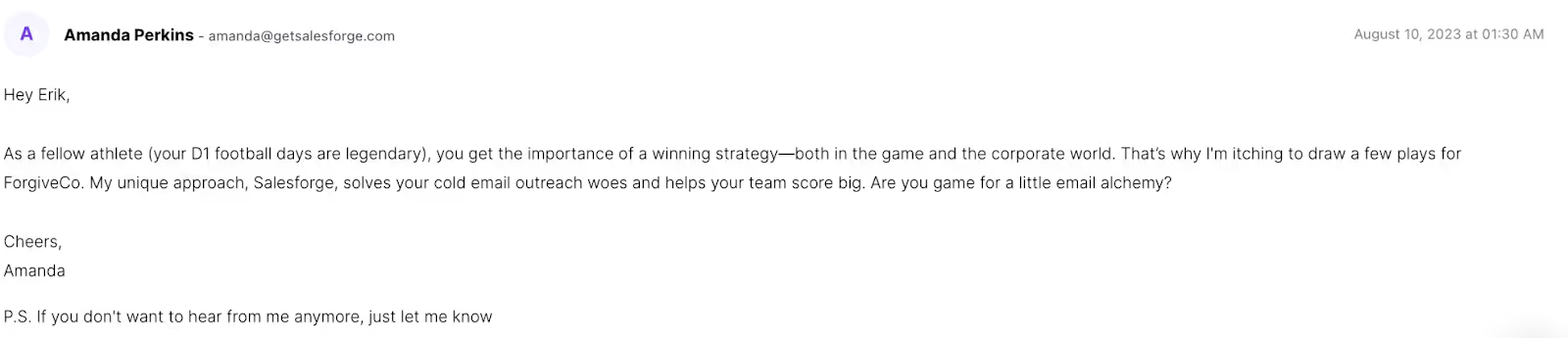
At the same time, Salesforge makes sure your emails get delivered. The AI warm-up feature helps your emails avoid the spam folder and reach the recipient’s inbox. So, not only are your emails personalized, but they’re also seen by the right people.
If you're serious about scaling your email outreach while keeping it personal, Salesforge is the tool you need.
Ultimately, the right email sign-off depends on the message you're trying to send. If you're still unsure, here's a quick recap to help:
Remember, whether you go with Warm Regards or Kind Regards, the sign-off you choose can set the tone for your email. Choose wisely because first impressions count—even at the end of an email!


.png)